Warehouse Pallet Shuttle Racking System For Sale
  • Warehouse Pallet Shuttle Rack
  • Warehouse Pallet Shuttle Rack
  • Warehouse Pallet Shuttle Rack
  • Warehouse Pallet Shuttle Rack
  • Warehouse Pallet Shuttle Rack
  • Warehouse Pallet Shuttle Rack

Warehouse Pallet Shuttle Racking System For Sale

No.WPSR01
The Pallet Shuttle system reduces labor costs and makes it more streamlined by automating the picking process. Elevator options add automation and reduce forklift use. In refrigeration applications, reducing the use of forklift trucks in freezers can sign
Download
View all downloads
  • Description

  • Specification

  • FAQ

HEDA SHELVES / PALLET SHUTTLE STORAGE MODEL WPSR01
Semi-Automated Warehouse Storage

Keep Forklifts Outside. Move Pallets Inside.

HEDA SHELVES Warehouse Pallet Shuttle Racking System combines deep-lane steel racking with a motorized shuttle for pallet storage and retrieval. Forklifts transfer pallets at designated lane access points, while the shuttle transports compatible pallets along the rails inside the rack. This semi-automated operating principle helps reduce forklift travel within deep storage lanes and supports more organized pallet handling in high-density warehouse layouts.

Motorized Shuttle Deep-Lane Pallet Storage Reduced Forklift Entry
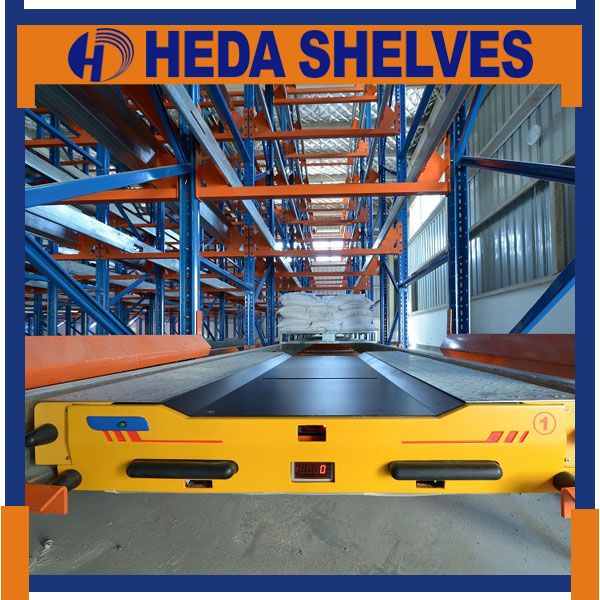
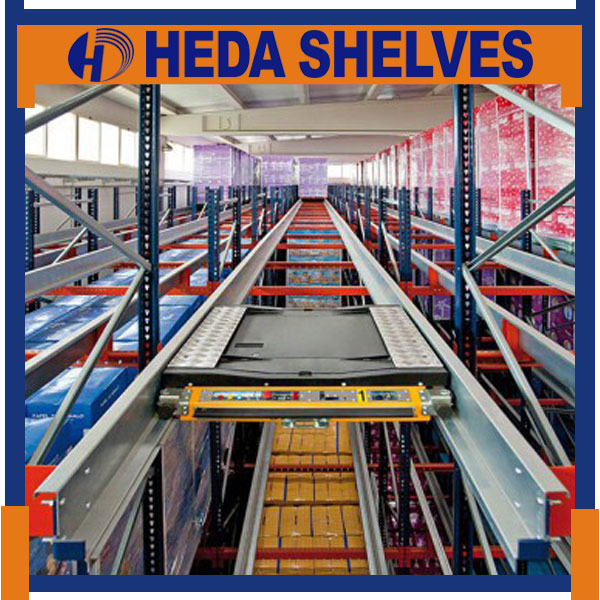
Original HEDA WPSR01 warehouse pallet shuttle rack showing a shuttle vehicle running between silver steel rails, dark blue upright frames, orange support beams and palletized goods stored in a deep lane

Original WPSR01 installation photo: shuttle vehicle at the lane entrance with palletized goods in deep storage.

WPSR01 HEDA product model
Semi-Automated Shuttle-based pallet movement inside lanes
High-Density Deep storage channels for suitable inventory
Configurable Racking, shuttle and project requirements
Original Product Photography

See the Shuttle at the Working End of the Lane

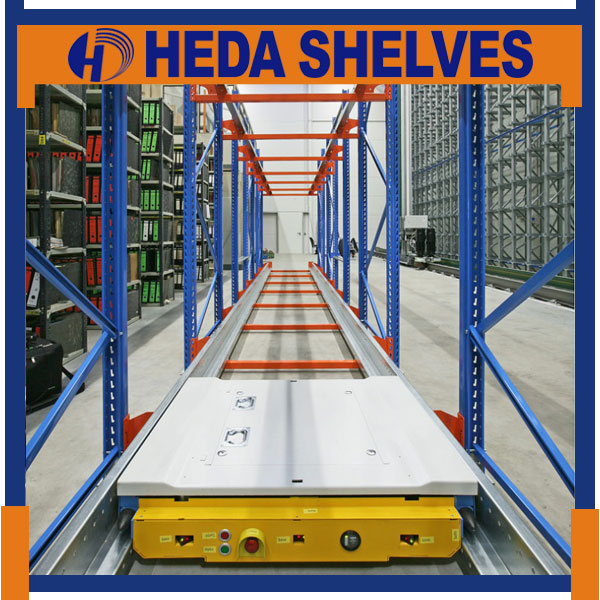
These two original WPSR01 photographs show the shuttle and rack structure from different working positions. The visible equipment has a yellow front section, metallic upper body and compatible rail arrangement.

Semi-Automated Operating Sequence

From Forklift Handoff to Deep-Lane Storage

The shuttle manages pallet movement along the storage lane. Forklifts perform pallet handoff and shuttle transfers where required, rather than driving deep into the rack for every storage cycle.

01

Select the Storage Lane

Assign a suitable storage lane according to pallet dimensions, inventory requirements and the approved warehouse operating plan.

02

Transfer the Pallet

A compatible forklift delivers the loaded pallet to the designated handoff position at the rack entrance.

03

Shuttle Travels Inward

The shuttle transports the pallet along its designated rails and places it at an available storage position.

04

Retrieve When Required

The shuttle retrieves the selected accessible pallet and returns it to the designated transfer position for forklift collection.

Operational note: The sequence describes a typical semi-automated pallet shuttle workflow. Shuttle commands, control functions, travel speeds, safety sensors and pallet positioning methods depend on the selected vehicle and approved system design.
Rack and Rail System

The Steel Structure Behind Every Shuttle Movement

HEDA's product description includes the following technical principle diagram for pallet shuttle racking. It identifies the main structural elements involved in supporting the shuttle travel path.

Original HEDA shuttle racking principle illustration showing columns, lateral bracing, shuttle rails, rail supports, connectors, spacers, tray guide boards and rack end closure
General HEDA shuttle rack structural illustration. It explains component functions rather than exact WPSR01 installed part dimensions.
Supporting System

Rails, Frames and Compatible Connections

Steel Upright Frames

Vertical uprights and bracing form the main supporting structure of the storage lanes.

Shuttle Travel Rails

Continuous rail arrangements provide a defined travel path for the motorized shuttle.

Rail Support and Connections

Supporting members and appropriate connectors maintain the intended rail positioning and transfer specified loads into the rack structure.

Guide and End Components

Suitable lane-end components and guides are selected around the required shuttle, pallet and safety operating conditions.

Technical specification reminder: The image above is a manufacturer-supplied concept illustration, not an approved engineering drawing for model WPSR01. The final rail profile, connection details, rack geometry, pallet support points and shuttle compatibility must be confirmed from project drawings.
Storage Operation Comparison

Two Deep-Lane Systems. Different Handling Methods.

Conventional Drive-In racking and shuttle racking can both provide high-density pallet storage. The important difference is how pallets travel inside the storage lane.

Conventional Deep-Lane Storage

Forklift-Operated Drive-In

A suitable forklift enters the internal racking lane and places or retrieves pallets from the specified positions. The truck operates within the steel rack structure, requiring carefully planned clearances and protection.

Internal movement: Forklift
Lane access: Forklift enters rack lane
Operation: Forklift-dependent pallet handling
Semi-Automated Deep-Lane Storage

Pallet Shuttle Racking

A motorized shuttle moves pallets along the rails inside the racking system. Forklifts transfer pallets at designated access positions, reducing the need to drive deep into the rack.

Internal movement: Motorized shuttle
Lane access: Forklift handoff at designated points
Operation: Semi-automated lane transport
Operational Efficiency

Designed to Reduce Repetitive Forklift Movements

HEDA SHELVES highlights pallet handling efficiency, reduced forklift mileage and potential benefits for refrigeration facilities as important reasons to consider shuttle racking. Actual results depend on the approved design and daily operations.

BENEFIT / 01

Less Forklift Traffic Inside the Rack

The shuttle handles longitudinal pallet transport, which can reduce the number of forklift movements needed inside deep storage lanes.

BENEFIT / 02

Lower Exposure to Rack Collisions

By reducing forklift entry into the rack structure, the system can reduce opportunities for certain vehicle-to-rack collisions. Safe operating procedures remain essential.

BENEFIT / 03

More Organized Deep-Lane Handling

Defined shuttle movements support controlled pallet transport within compatible storage lanes. Throughput depends on shuttle quantity, controls, travel distances and forklift coordination.

A Practical Option for Cold Storage Projects

In refrigerated or frozen warehouses, reducing forklift travel may help lower handling-related energy demand and vehicle activity. However, the shuttle vehicle, batteries, control electronics and steel components must be approved for the operating temperature. Energy savings and cold-storage suitability must be verified for the specific project.

Lane Access and Stock Rotation

Decide How Stock Should Move First.

A shuttle system can be evaluated for different inventory rotation strategies. The required lane entry and exit configuration must be confirmed before the racking layout is finalized.

Operating principle: FIFO and LIFO capabilities depend on physical lane access and the approved shuttle control sequence. They should not be assumed from the presence of a shuttle alone.
01 / STOCK ROTATION

LIFO

Last In, First Out is commonly associated with single-ended deep-lane arrangements. The same end is used for loading and retrieval, subject to the selected shuttle operating logic.

02 / STOCK ROTATION

FIFO

First In, First Out may be supported where separate loading and unloading ends are available and the controls support the intended movement sequence. This requires suitable two-ended access and design.

Technical Configuration

Match the Shuttle, Rails and Racking to the Same Pallet.

Pallet shuttle racking is an integrated storage solution. Rack dimensions, rail arrangements, shuttle carrying capacity and material-handling requirements must be specified together.

Model-specific data: The official WPSR01 page does not list a fixed rack size, rated pallet capacity, shuttle speed, battery runtime, charging time or maximum lane depth. These figures must be confirmed for the actual equipment and project design. Do not apply technical parameters from another shuttle model automatically.

WPSR01 Product Reference

Model WPSR01
Product Name Warehouse Pallet Shuttle Racking System
Storage Type High-Density, Deep-Lane Pallet Storage
Operating Method Semi-Automated Shuttle Pallet Transport
Rack Structure Steel Upright Frames, Bracing, Rail Supports and Shuttle-Compatible Travel Rails
Featured Frame Color Blue
Featured Support Color Orange
Shuttle Appearance Yellow Front Housing with Metallic and Dark Upper Components, as Photographed
Pallet Load To Be Confirmed for the Selected Rack and Shuttle
Rack Dimensions Project-Specific Warehouse Configuration
Lane Depth To Be Confirmed Based on Storage Positions and Equipment
Shuttle Quantity According to Throughput, Active Lanes and Operating Requirements
Shuttle Speed Equipment-Specific; To Be Confirmed
Power Supply Battery-Powered Shuttle; Battery Specifications to Be Confirmed
Stock Rotation LIFO or FIFO According to Approved Lane Access and Controls
Cold Storage Use Subject to Approved Equipment Temperature Range
Automation Upgrade Optional Elevator / Additional Automation, Subject to Project Design
Customization Racking Layout, System Configuration and Project-Specific Requirements
Custom Shuttle Storage Project

Start with Your Pallets. Plan for Your Throughput.

The right shuttle rack configuration depends on the actual goods, warehouse layout, handling process and required pallet movements. HEDA SHELVES can discuss customized racking layouts and compatible shuttle storage solutions.

For an accurate quotation: Provide your pallet dimensions, maximum unit load, target storage capacity and expected daily pallet throughput. If the project involves a freezer, also provide the operating temperature and cold-room requirements.

Information Needed for Your Quotation

Type of stored products
Number of SKUs
Pallet length and width
Pallet base design
Maximum loaded pallet weight
Loaded pallet height
Required pallet positions
Required pallet positions per lane
Number of vertical storage levels
Warehouse dimensions
Available clear height
Warehouse floor plan
Existing forklift equipment
Expected daily pallet movements
Peak pallets per hour
FIFO or LIFO preference
Storage temperature
Number of access sides
Additional automation requirements
Delivery destination

Detailed project information helps determine the appropriate number of shuttle units, lane arrangement, rail specifications and warehouse layout.

Frequently Asked Questions

Questions About Warehouse Pallet Shuttle Racking

Is WPSR01 a fully automated storage system?

The product is presented as a semi-automated pallet shuttle storage solution. The shuttle transports pallets inside the rack lanes, while forklifts and operators remain involved in pallet handoff and shuttle transfer. Additional automation requires separate system design.

How does a shuttle reduce forklift travel?

In a conventional Drive-In system, forklifts travel inside the storage lanes to handle deep pallets. A shuttle system moves pallets internally by motorized rail-guided equipment. This can reduce forklift movements within the racks.

Can this system be used in refrigerated warehouses?

Pallet shuttle systems may be considered for refrigerated and frozen storage. Shuttle motors, batteries, electronics, rack components and operating procedures must be suitable for the required temperature range. Cold-storage suitability must be confirmed for the selected equipment.

What is the shuttle's rated pallet capacity?

The WPSR01 page does not publish a fixed universal shuttle load rating. Capacity must be confirmed for the selected shuttle vehicle, pallet geometry, rail supports and complete racking system.

How many pallet shuttle vehicles are needed?

The required number depends on storage lane quantity, daily pallet movements, peak throughput, rack levels and shuttle transfer requirements. Shuttle quantity should be established during project planning.

Can WPSR01 support FIFO inventory management?

FIFO operation may be considered where the storage layout provides appropriate separate loading and unloading access, together with compatible shuttle controls. Single-ended deep lanes are commonly associated with LIFO inventory rotation.

Is a vertical elevator included with WPSR01?

No elevator should be assumed to be part of the standard shuttle rack package. HEDA SHELVES mentions elevator options as a way to increase automation and reduce forklift involvement. Their inclusion and compatibility require a separate technical quotation.

HEDA SHELVES / SEMI-AUTOMATED WAREHOUSE STORAGE

Planning a Warehouse Pallet Shuttle Project?

Share your pallet dimensions, load requirements, warehouse floor plan and expected storage throughput. Discuss a customized pallet shuttle racking solution with HEDA SHELVES.

GET QUOTE NOW →
1. Light and medium upright

2. Heavy duty upright

3. Step beam

4. Box beam

HEDA SHELVES / CUSTOMER SUPPORT

Frequently Asked Questions

Find answers to common questions about our manufacturing, product customization, ordering, delivery and warehouse shelving solutions.

01 Are you a manufacturer or a trading company?

We are a manufacturer. HEDA SHELVES has specialized in manufacturing warehouse racking systems, supermarket shelving and various display stands since 2001.

02 Where is your factory located? Can I visit?

Our factory is located in Foshan, Guangdong, China. We warmly welcome customers to visit our factory. Please contact us to arrange your visit.

03 Are product samples available?

Yes, samples are available upon request. A sample charge applies, and the sample cost will be refunded when you place your next order.

04 Can you manufacture products according to our designs?

Yes. HEDA SHELVES has extensive experience in customized shelving and display solutions. We can manufacture products according to customer designs and project requirements.

  • Floor plans and 3D drawings can be provided by HEDA engineers.
  • Customized shelving layouts and configurations are available.
  • Our products support modular construction and integration into different store or warehouse layouts.
05 Can I order products in customized sizes and colors?

Of course. We welcome custom sizes and colors to meet different storage, retail display and project requirements.

06 Do you manufacture shelving and displays using different materials?

Yes. Our products are mainly manufactured from metal. We also produce shelving accessories and display solutions using materials such as:

  • Wood
  • Titanium alloy
  • Acrylic
  • Glass
  • Other materials according to project requirements
07 What is your production and delivery lead time?

Our general production lead time is within 15 days. The actual lead time depends on the order quantity, product design and customization requirements.

08 What are your payment terms?

Our standard payment terms are:

  • 30% deposit upon confirmation and signing of the Proforma Invoice (PI).
  • 70% balance paid by T/T before delivery.
09 How can my order be shipped?

We can arrange shipment using the following methods:

Option 1 — Sea Freight

Please provide your destination seaport. We will check and update the sea freight cost based on your shipping destination.

Option 2 — Customer-Nominated Shipping Agent

If you have your own shipping agent or freight forwarder, please provide their contact details. We will coordinate the delivery arrangements with your nominated agent.

10 What is your minimum order quantity (MOQ)?

Our minimum order quantity is generally 10 sets. Larger order quantities may qualify for more competitive pricing.

11 How can I get a quick and accurate quotation?

Since different customers and projects require different product sizes and specifications, providing the following information will help us prepare your quotation more efficiently.

For Warehouse Storage Racking

  1. Products to be stored: Tell us what items you plan to store.
  2. Storage method: Specify whether your products will be stored in cartons or on pallets.
  3. Weight and dimensions: Provide the unit weight and dimensions (Length × Width × Height) of each carton or pallet.
  4. Storage configuration: Tell us how many cartons or pallets you need per level and how many storage levels are required.
  5. Available space: Provide the dimensions of your storage area. A warehouse floor plan is especially helpful.
  6. Accessories: Specify any required wire decking, metal decking, wooden decking, safety bars, shims or other accessories.

For Supermarket & Retail Display Shelving

  1. Store layout: Provide the size of your retail space or a store floor plan.
  2. Products to display: Tell us what merchandise you plan to display and the required loading capacity.
  3. Preferred shelving style: Specify your requirements for metal or wood construction, dimensions, colors and design.

Not sure about the specifications? Simply tell us about your storage or display requirements. Our experienced sales team will help you develop a suitable shelving solution.

12 How do I install the shelving or racking system?

We provide step-by-step installation drawings for each type of shelving and racking system.

Our experienced team supports customers throughout the design, production and after-sales stages.

13 How are your products packed for shipment?

Our shelving products are generally flat-packed and protected with bubble wrap or protective film, using standard export cartons.

Other packaging options, such as wooden boxes, are also available according to customer requirements.

14 What is the difference between a starter rack and an add-on rack?

The main difference is the number of upright frames required.

  • Starter Rack (Main Rack): The first shelving unit in a row, supplied with two upright frames.
  • Add-On Rack: An extension unit that uses one additional upright frame and connects to the preceding rack.

Example: For a continuous row of 15 wall shelving bays, the configuration would be 1 starter rack + 14 add-on racks.

We use Cookies to improve your browsing experience. By continuing to use this website, you agree to our use of Cookie.